Why the World's Medicine Capital Is in Bozhou, China — And Why Smart Buyers Source Directly from Here
Posted on August 11, 2026
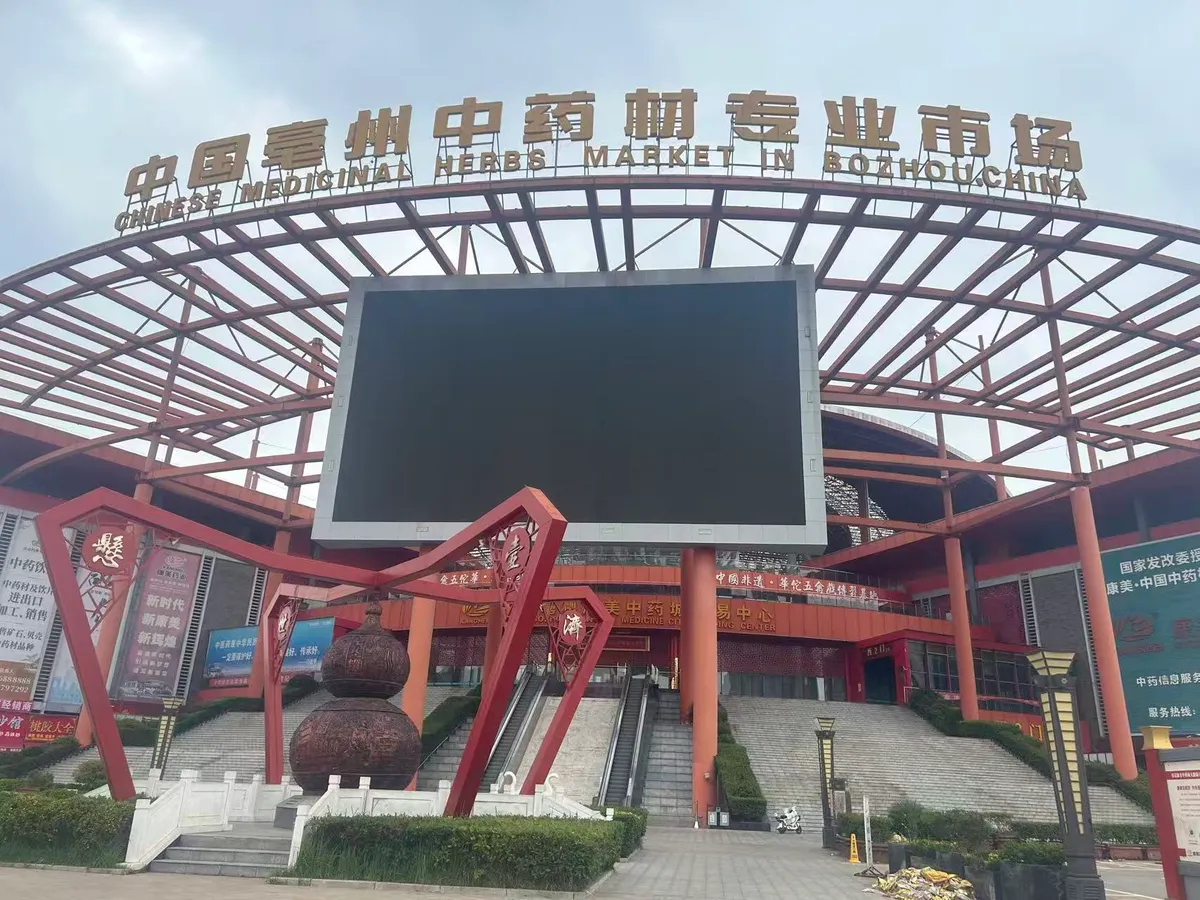
Every morning before sunrise, the gates of Kang Mei Chinese Medicine City swing open. Within two hours, more than 10,000 wholesalers have set up their stalls. By noon, an estimated 80 million RMB worth of herbs has changed hands. This happens six days a week, 52 weeks a year — and it has been happening, in one form or another, since the Eastern Han dynasty.
The city is Bozhou, in northern Anhui province. For international buyers of Chinese herbs, spices, and botanicals, this 3,000-year-old trading hub is the single most important place on the supply chain map. Roughly 80% of China's herbal medicine distribution flows through its markets — an annual transaction volume exceeding 100 billion RMB ($15 billion USD). More than 2,000 botanical species are traded here, making it the world's largest concentration of medicinal plant commerce by both volume and variety.
The Bozhou Advantage: De-Risking Your Botanical Supply Chain
Three structural advantages make Bozhou irreplaceable:
1. Geographic position. Sitting at the intersection of the Yellow River basin and the Huai River plain, Bozhou is surrounded by some of China's most productive herb-growing regions. Daodi herbs — those grown in their historically optimal climate and soil conditions — arrive here within hours of harvest, not days.
2. Generational expertise. Herb identification, grading, and processing knowledge passes through families that have been in the trade for centuries. A Bozhou wholesaler can assess moisture content, volatile oil retention, and grade by sight, touch, and smell faster than a lab machine.
3. Infrastructure density. Bozhou is home to over 200 GMP-certified processing facilities, cold storage warehouses, extraction plants, and logistics hubs purpose-built for botanical materials. It is not just a marketplace — it is a full-spectrum manufacturing cluster.
Key fact: The China TCM Trading Center in Bozhou covers 1.2 million square meters, houses more than 10,000 fixed stalls, and processes over 200,000 tons of dried herbs annually. If you import Chinese herbs, statistically, they pass through this market.
Cutting Out the Middleman
The traditional export chain for Chinese herbs involves four to five intermediaries: regional collector → provincial wholesaler → export trading company → overseas distributor → end buyer. Each layer adds margin and obscures traceability. Buyers who source directly from a GMP-certified Bozhou manufacturer skip three of those layers:
- Price: 15–30% below trading-company quotes for comparable quality
- Traceability: Batch-level documentation from source field to export shipment, with COA on every order
- Consistency: Direct communication with the production team means your spec is dialed in once and held across every shipment
- Flexibility: Trial batches, custom blends, private-label packaging, and mixed-container loads that intermediaries routinely refuse
GMP Manufacturing at Scale
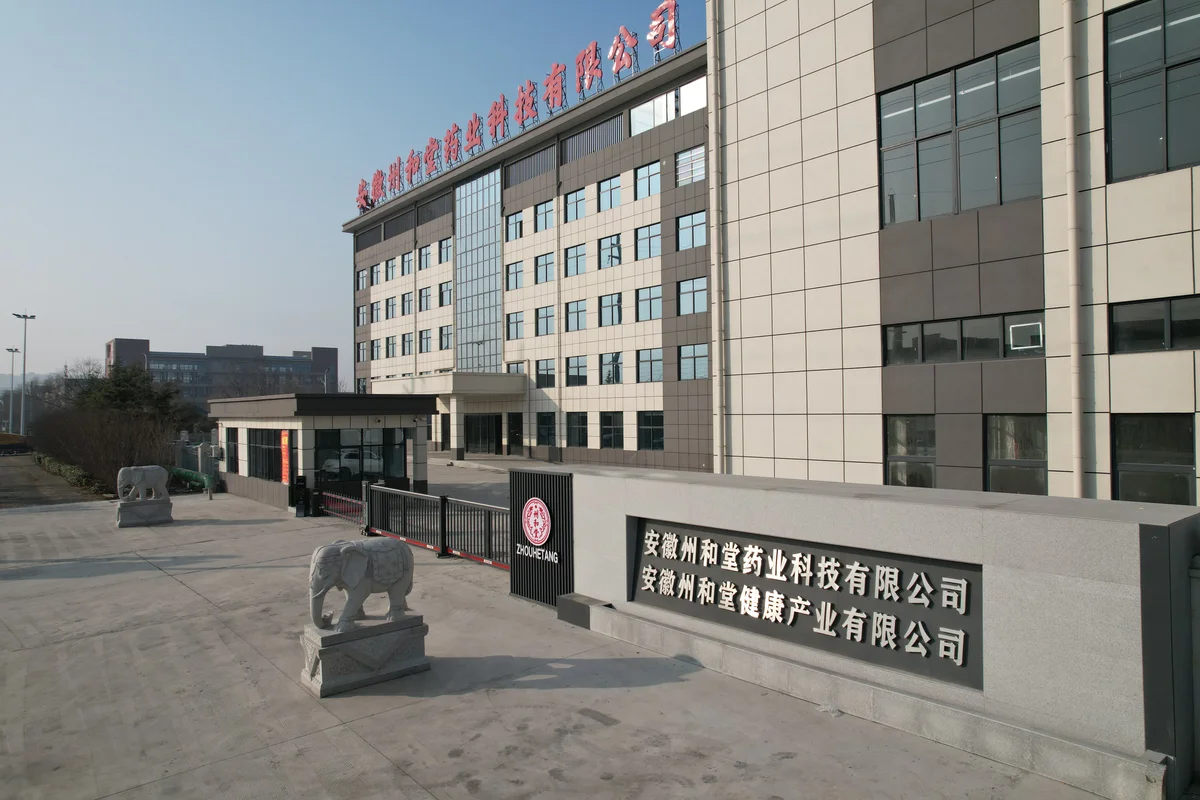
Located within this ecosystem is Anhui Zhouhetang Health Industry Co., Ltd. — a GMP, ISO, and FDA-registered manufacturer with a 25.5-acre (17,000 m²) facility and a daily production capacity of 300,000 units. The company carries 500+ botanical varieties and exports to 30+ countries across Europe, North America, the Middle East, and Asia-Pacific.
"Bozhou is the world's medicine capital — not just China's. Our mission is simple: give international buyers direct access to this 3,000-year-old supply chain, with the traceability and quality standards that modern markets demand."
— Zhouhetang founding team
Zhouhetang's operation covers the full production chain: raw material sourcing and quality inspection → cleaning, cutting, and drying in GMP clean rooms → low-temperature grinding (below 45°C, preserving volatile oils conventional mills destroy) → automated VFFS packaging for pouches, sachets, and tins → lot-coded, documented, and shipped. Every batch is tested in-house for heavy metals, pesticide residues, and microbial safety before release. A Certificate of Analysis ships with every order. Compliance covers EU MRL, FDA, and GCC standards.
Three Categories, One Source
Zhouhetang's product range is organized into three core categories, each with dedicated production lines:
- Chinese Herbal Medicine — 500+ whole, sliced, and powdered herbs sourced from daodi regions and processed under GMP standards.
- Spices & Seasonings — Star anise, cassia cinnamon, Sichuan pepper, dried ginger, fennel, cumin, and 15 more. Whole, ground, and custom-blend specs with EU MRL-compliant testing.
- Herbal Tea & Tisanes — Chrysanthemum, jasmine, osmanthus, rose, honeysuckle, lemon slices, and custom blended formulations with OEM/ODM packaging available.
Why Daodi Sourcing Matters
The concept of daodi — literally "the way of the land" — is the original geographic indication system, predating European AOP/DOP by nearly two millennia. A daodi herb is one grown in its historically validated optimal region, where soil chemistry, elevation, rainfall, and temperature produce the highest concentration of active compounds.
- Goji berry (Lycium barbarum): Sourced from Ningxia, where 12+ hours of daily sunlight drives polysaccharide content above 3.5%
- Dong quai (Angelica sinensis): Sourced from Min County, Gansu, at 1,900–2,500m elevation, producing ligustilide concentrations up to 1.5%
- Notoginseng (Panax notoginseng): Sourced from Wenshan, Yunnan, where iron-rich red soil yields notoginsenoside R1 levels that commodity-grade alternatives cannot match
For a buyer writing a specification sheet, daodi sourcing is not a marketing claim — it is a quantifiable QC parameter. If your current supplier cannot tell you which county your astragalus was grown in, you are buying commodity-grade material at a premium price.
Ready to Streamline Your Botanical Supply Chain?
Contact the Zhouhetang export team today for a custom quote, sample request, or to review our full catalogue of 500+ GMP-certified ingredients — from herbs and spices to tea and custom blends.
Request a Quote →No minimum order quantity · Free samples · COA with every shipment